This camera manual library is for reference and historical purposes,
all rights reserved.
This page is copyright© by
, M. Butkus,
NJ.
This page may not be sold or distributed without the
expressed permission of the producer
I have no connection with any camera company
On-line camera manual library
This is the full text and images from the manual.
This may take 3 full minutes for all images to appear.
If they do not all appear. Try
clicking the browser "refresh" or "reload button" or right click on the
image, choose "view image" then go back. It should now appear.
To print, try printing only 3 or 4
pages at a time.
If you find this manual useful, how about a donation of $3 to: M.
Butkus, 29 Lake Ave., High Bridge, NJ 08829-1701
and send your e-mail address
so I can thank you.
Most other places would charge you $7.50 for a electronic copy or
$18.00 for a hard to read Xerox copy.
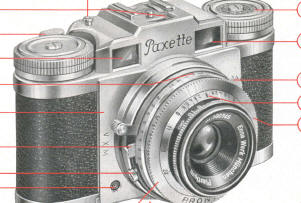
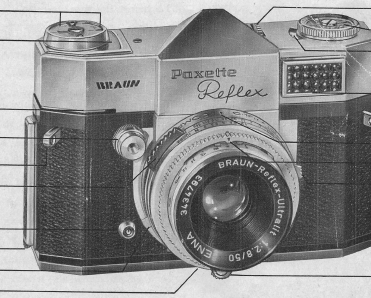
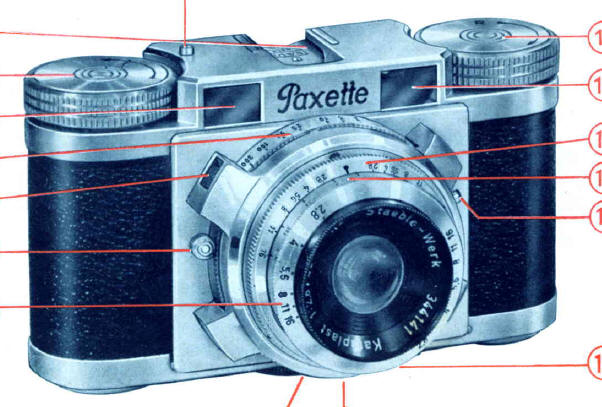
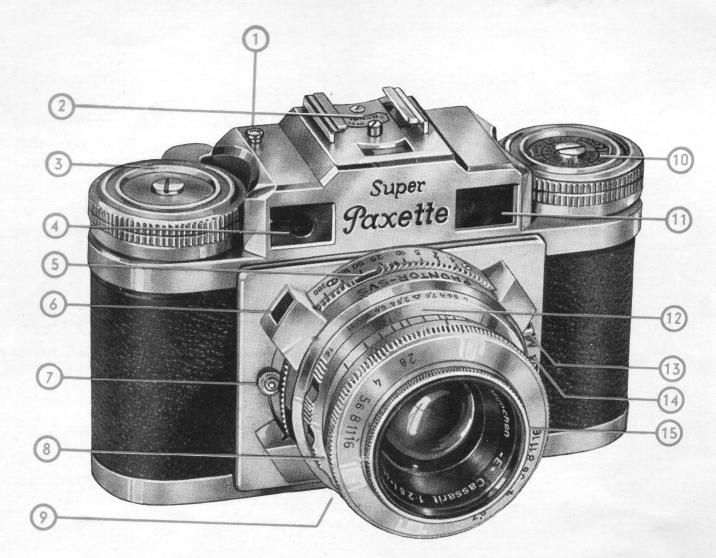
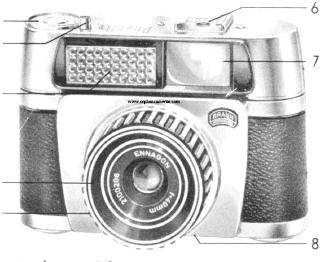
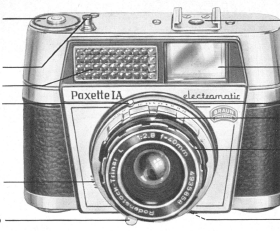
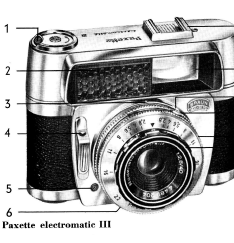
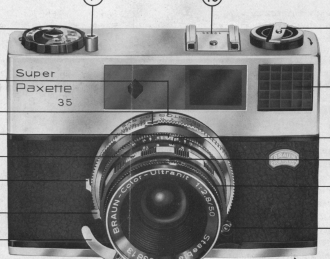
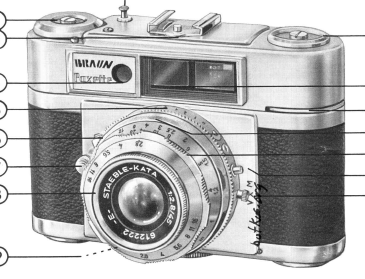
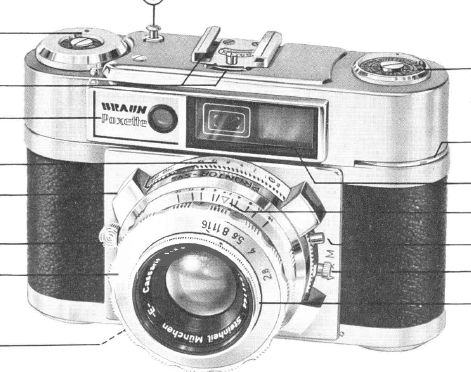
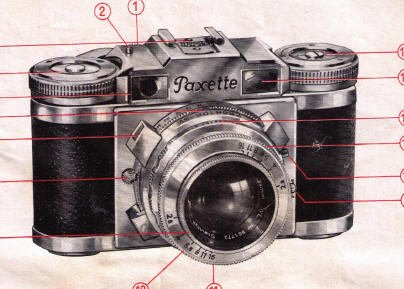
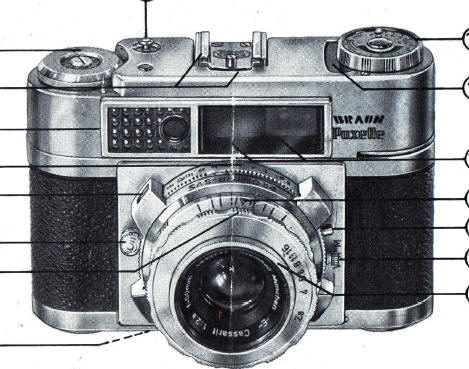
| 1. Film locking stud 2. Film Counter 3. 4. Optical exposure meter 5. Shutter setting 7. Shutter release lever 8. Lens aperture control 9. Locking ring 11. Film rewinding knob 12. Optical eye level view finder 13. Depth of field ring 14. Focusing ring 15. |
![]() |
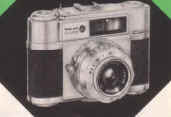
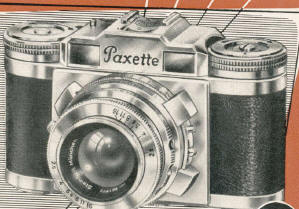
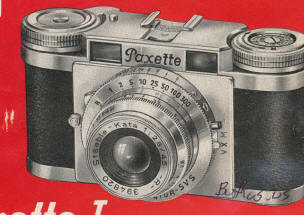
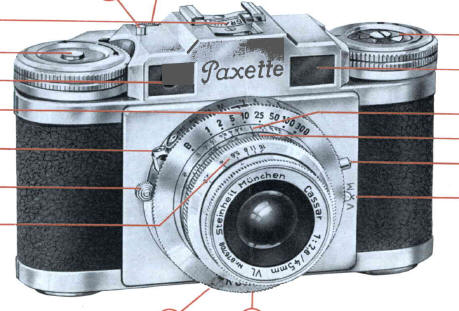
The Paxette camera is made by
![]() |
The milled locking ring on the bottom of the camera is released by turning anti-clockwise. The back and bottom of the camera can then be slid out. |
![]() |
The arm which retains the cassette is swung outwards by about 90° and the cassette is
engaged in the REWIND dog. The lever holding the cassette is then swung back again
so that it fits over the protruding spool knob.
|
![]() |
When film is inserted, it is imperative that the margin of the film is sliding underneath the guide spring at the right side of the cog-wheel. |
![]() |
Pull out the film from the cassette sufficiently far for the trimmed end to be inserted into the slot of the empty spool and then bent back on itself so that it cannot slip. Turn the film winding knob in the direction of the arrow until the sprocket of the film transport engages with the perforations of the film. As the turning of the film winding knob causes the shutter to be cocked, the shutter release ]ever should be operated every so often whilst winding is in progress. This will enable the film to be wound on. Once the perforations have engaged the sprock, the back of the camera should be replaced and locked. |
Warning: Direct sunlight should be avoided when loading with film.
If there is no shade, the operator's own shadow in better than direct sunlight.

To close the camera the back should be inserted between the camera housing and front
plate and the locking ring tightened.
![]() |
The film counter reads backwards from 36 to 1. It thus indicates the number of unexposed frames still available. After the film has been loaded and the camera has been closed, the counter should be set at the red dot near the figure 36, by means of the projecting teeth. The film winding knob is then turned until the reading is 36. It is necessary to release the shutter to allow the film to wind on. |
Film Winding and Film Transport
![]() |
The shutter winding mechanism, film transport and film counter are coupled so that they are operated when the winding knob is wound in the direction of the arrow. After the shutter has been released and until the camera has been re-wound, the safety device which prevents double exposure is in operation. |
How to unload the Camera
![]() |
The whole length of the film has been exposed when the counter reads figure 1 and the
shutter has been released.
|
A few further turns will then wind the film completely into the cassette, and the camera can be opened for insertion of a new film.
Note: The locking stud must remain depressed throughout the whole rewinding operation. It throws the sprocket out of gear.
| 1. Open the camera 2. Insert film cassette 4. Close the camera |
1. Press down locking stud throughout the winding operation
3. Turn rewind knob in the direction of the arrow 6. Remove the cassette |
Checking the Re-winding
Warning. If force is used against this resistance the
perforation of the film will tear. When continuing to rewind, press
home the locking stud.

To make sure that the film transport is functioning properly and the film really being wound on, lift the rewind
knob as far as it will go. If the film transport is functioning properly the rewind knob will turn in the opposite
direction during winding operations.

The lens aperture or diaphragm is set by means of the front ring on the lens. Bring
the red dot into register with the black line at whatever setting is required.